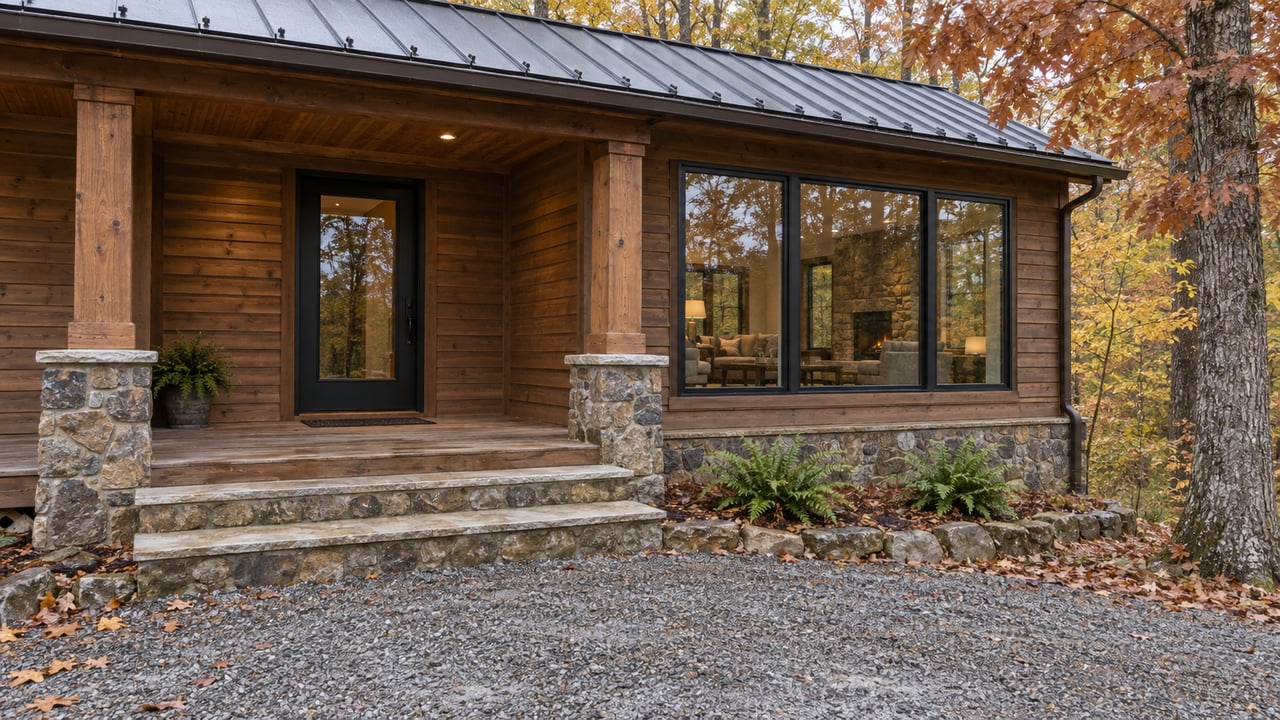
A cabin outside Ellijay can have a loft with bunks and a finished basement with two queen rooms, and its listing can say it sleeps twelve. How many guests can it legally host as a short-term rental? Under a draft amendment now before Gilmer County, the answer would come from a record most buyers never ask to see: the bedroom count on the septic permit filed with Georgia Environmental Health.
That draft goes to a public hearing this Wednesday, October 14, at 4:30 p.m. at the Gilmer County Community Center, 824 Industrial Blvd. in Ellijay. It is still a proposal. If it is adopted as written, a cabin's rental income would depend on a document that isn't searchable online. The county's short-term rental page posts the draft, a comparison report, and the presentation commissioners heard on October 1.
Where the Bedroom Number Comes From
Gilmer County's host license ordinance caps occupancy at two people per bedroom plus two for the rental as a whole. The October 8, 2026 draft keeps that formula and adds a sentence about where the bedroom number comes from: "The number of bedrooms per house is determined by the Georgia State Environmental Health Department septic tank permit." The draft also says advertising more than the stated maximum is a violation.
Here is how the formula works out:
| Bedrooms on the septic permit | Maximum overnight guests |
|---|---|
| 2 | 6 |
| 3 | 8 |
| 4 | 10 |
| 5 | 12 |
| No permit on file, no certified evaluation | 4 |
That last row is the new part. In the copy of Chapter 45 the county generated in October 2025, a bedroom could be identified from "the building permit, environmental health, tax assessors records, or site inspection." The ordinance was amended again on December 15, 2025, and that text wasn't part of this review. So the exact point at which the septic permit became the single deciding record is unclear. The draft itself is clear, though. It names one record, and it tells you what happens when that record is missing.
What Happens When There Is No Permit on File
The draft adds a section titled "Maximum Occupancy Determination in the Absence of an Official Septic Permit." If no septic evaluation or installation permit is on file with Gilmer County Environmental Health or the county's Community Development / Planning & Zoning Department, an applicant has two options.
The first is a written certification from a Georgia-licensed septic contractor or inspector. It has to verify tank capacity, structural integrity, and the functional absorption area, and it has to state a bedroom-equivalent design capacity. The county then applies the standard formula to that number.
The second is the default. In the draft's words:
"the property's maximum overnight occupancy shall be restricted to a strict default limit of four (4) total guests, regardless of the physical size or advertised layout of the structure."
An application that uses neither option is denied. The draft also covers systems that can't be upgraded. In that case, occupancy stays tied to whatever bedroom count the system supports. Short-Term Rental Director Mary Abernathy presented this section to commissioners on October 1 as one of three major additions in the amendment.
Under the draft, the guest count in a listing carries no weight in setting occupancy. The septic permit, a certified evaluation, or the four-guest default does, and of those, only the permit may already be on file before a buyer makes an offer.
Why the Permit and the Floor Plan Drift Apart
Septic systems in Georgia are designed around bedrooms. State rules define a bedroom as a room "intended primarily for sleeping purposes, as shown on the building plan." The minimum residential tank is 1,000 gallons for one through four bedrooms, plus 250 gallons for each bedroom above four. The drainfield is sized per bedroom based on how quickly the soil absorbs water. Under the state manual's table for conventional trench fields, that ranges from 125 square feet per bedroom in fast-draining soil to 410 square feet per bedroom in slow soil.
The Gilmer County Environmental Health permit packet says the same thing more directly: field sizing depends on bedroom count and soil type, not on how many bathrooms the house has. The application asks for a floor plan of every floor, including unfinished basements, and for bedroom counts on the main floor, second floor or loft, basement, and over the garage.
Those are the spaces where mountain cabins tend to grow after the original permit. A basement finished years later or a loft fitted with beds changes the house without changing the record. UGA Extension notes that home additions and improvements have to be approved by Environmental Health. If that approval never happened, the permit still shows the original count. Under the draft, the original count sets the guest limit.
State rules also say that approving an installation doesn't guarantee the system will work well for any period of time. A permit tells you what the system was designed to handle. It doesn't tell you its condition today.
Pulling the Record Before an Offer
Georgia rules don't list an ordinary resale of an existing home as something that triggers a septic evaluation. So getting the record is up to the buyer. Here is how the process works in Gilmer County:
- Request the septic drawing. The North Georgia Health District says septic drawings "are not publicly accessible," but local Environmental Health offices keep them and can provide property-specific records when they exist. Email the request with the full property address and allow one to two business days. You can also call or visit for faster help. Gilmer County Environmental Health is at 1 Broad Street, Suite 003, Ellijay, GA 30540, phone 706-635-6050, email [email protected].
- Compare the permit's bedroom count to the seller's disclosure. A publicly posted 2019 version of the Georgia REALTORS Seller's Property Disclosure Statement asks how many bedrooms the septic system was approved for, whether a sewage pump serves the house, when the tank was last professionally serviced, and whether there have been leaks or backups. Sellers answer based on their actual knowledge and belief, and the form tells buyers to do their own inspections, so the disclosure isn't an inspection of the system. GAR lists a newer revision of the form dated June 1, 2026, so the current wording may differ.
- Compare both to the listing's guest count. If the listing advertises more guests than the permitted bedrooms support under the two-per-bedroom-plus-two formula, the gap is worth resolving before the rental math goes into an offer.
- If no record exists, decide on an evaluation early. The draft would accept a certified evaluation from a Georgia-licensed septic contractor or inspector. The state's own existing-system evaluation reviews available installation and maintenance records along with current site performance, and it reports the system's status at the time of the evaluation.
Why This Lands at the Closing Table
A host license doesn't come with the house. The county code already says licenses are non-transferable. The draft keeps that rule. New owners would apply for their own license before advertising or operating, with a 30-day grace period during the property transfer.
So every sale creates a new application, and under the draft, every application calls for either a septic permit on file or one of the two fallback options. The seller's occupancy number never has to pass through this process. The buyer's does, in the first month of ownership. According to the Ellijay Community Website, county licensing materials put the fees at $225 for a new license and $300 for a renewal, and a county notice this year corrected the active-license count to 1,448. With more than a thousand licensed units changing hands over time, the septic record ends up in a lot of transactions.
Other Septic and Rental Items on the Hearing Agenda
Abernathy's October 1 presentation also described a proposed requirement that every STR septic system be pumped once every two years. She said the state currently calls for pumping every three to five years and that a local septic business recommended two. She said it would be added before the hearing, but it isn't in the October 8 draft text that's posted.
The draft also includes these proposals:
- A minimum liability coverage limit of $1 million.
- Removing the county-run code safety inspections, including the once-every-three-years reinspection, along with the road maintenance agreement requirement.
- A documented neighbor complaint process. Anonymous complaints wouldn't be processed, owners would get at least five business days to respond, and three valid complaints about the same issue from separate incidents within six months could lead to a suspension hearing before the Short-term Rental Board.
The county hasn't said when commissioners expect to vote on a final version.
A Few Common Questions
Does the four-guest default apply to cabins with an existing license? The draft applies the no-permit pathway "when a property owner applies for a Short-Term Rental Host License." How it would apply to renewals depends on the final adopted text, so it's worth confirming with the STR Department once commissioners act.
Can I look up a septic permit online? No. The North Georgia Health District says the records aren't publicly accessible, but the Gilmer office can provide them on request when they exist.
Does a bigger tank mean more bedrooms? Not necessarily. Georgia's 1,000-gallon minimum covers one through four bedrooms, and the drainfield is sized separately per bedroom based on soil.
Who answers questions about the draft? Abernathy invited calls at 706-635-4361, Option 1.
This post is general information about how the proposed rules and Georgia septic permitting work. It isn't legal, tax, or financial advice, so please confirm your own property's situation with Gilmer County, Environmental Health, and the right licensed professionals.
If you're looking at a cabin around Ellijay as a rental, The Conrey Family Team can help you request the septic record, compare it to the listing and disclosure, and follow what commissioners decide after October 14. Contact Us before you settle on an offer.